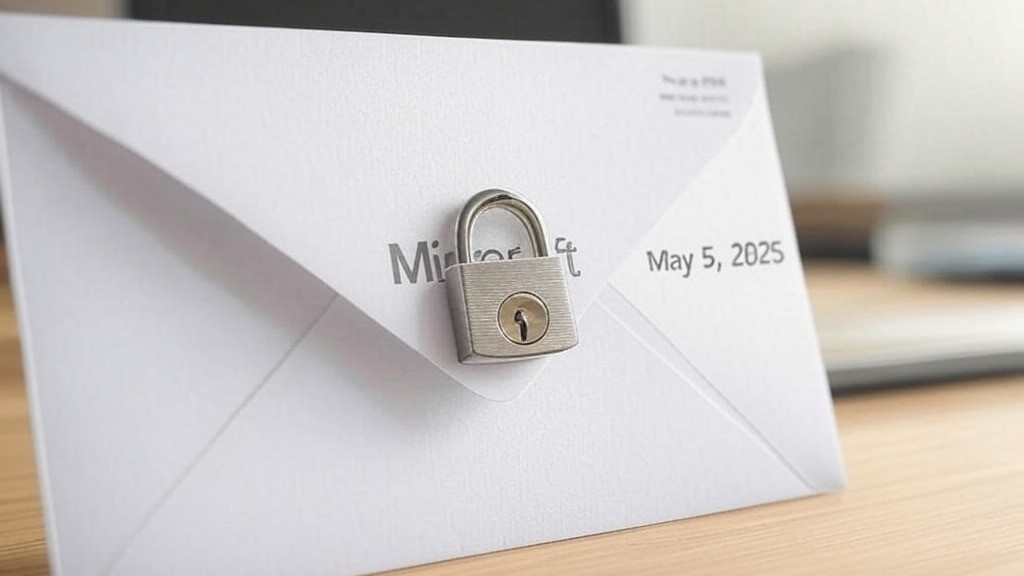
Starting May 5, 2025, Microsoft will implement stricter email policies for bulk senders.
--> Microsoft sometime update the article, here is the source link and a copy below Source Link
Strengthening Email Ecosystem: Outlook’s New Requirements for High‐Volume Senders
This applies to Outlook.com - our consumer service, which is supporting hotmail.com live.com and outlook.com consumer domain addresses.
April 29th Update - Changes have been made to the action take on messages that do not meet requirements, please see details below.
Introduction
In an era where email remains one of the most widely used tools for personal and business communications, Outlook is stepping up its commitment to protect inboxes and preserve trust in the digital ecosystem. Today, we’re announcing new requirements and best practices designed to strengthen email authentication for domains sending more than 5,000 emails per day.
These new requirements will enforce stricter standards by including mandatory SPF, DKIM, DMARC settings. Outlook is pushing the broader industry toward best practices and safeguarding the millions of individuals and small businesses that rely on us every day. These measures will help reduce spoofing, phishing, and spam activity, empowering legitimate senders with stronger brand protection and better deliverability.
Outlook has always prioritized user safety and reliability; we’re proud to further invest in this solution that will keep our customers safe and reinforce the best practices across the industry. We believe that by raising the bar for large senders, we can inspire lasting change that benefits everyone.
What's Changing?
For domains sending over 5,000 emails per day, Outlook will soon require compliance with SPF, DKIM, DMARC. Non‐compliant messages will first be routed to Junk. If issues remain unresolved, they may eventually be rejected. Senders will soon start requiring compliance with the following requirements:
- SPF (Sender Policy Framework)
- Must Pass for the sending domain.
- Your domain's DNS record should accurately list authorized IP addresses/hosts.
- DKIM (DomainKeys Identified Mail)
- Must Pass to validate email integrity and authenticity.
- DMARC (Domain-based Message Authentication, Reporting, and Conformance)
- At least p=none and align with either SPF or DKIM (preferably both).
Learn more about email authentication here.
Additional Email Hygiene Recommendations
Large senders should also adopt these practices to maintain quality and trust:
- Compliant P2 (Primary) Sender Addresses: Ensure the “From” or “Reply‐To” address is valid, reflects the true sending domain, and can receive replies.
- Functional Unsubscribe Links: Provide an easy, clearly visible way for recipients to opt out of further messages, particularly for marketing or bulk mail.
- List Hygiene & Bounce Management: Remove invalid addresses regularly to reduce spam complaints, bounces, and wasted messages.
- Transparent Mailing Practices: Use accurate subject lines, avoid deceptive headers, and ensure your recipients have consented to receive your messages.
Outlook reserves the right to take negative action, including filtering or blocking—against non‐compliant senders, especially for critical breaches of authentication or hygiene.
Enforcement Timeline
Starting today, we encourage all senders and particularly those that send at high volume to review and update their SPF, DKIM, and DMARC records, in preparation for when the enforcement begins, starting in May.
After careful consideration and to ensure the protection of users and remove any confusion on why a message was in the junk folder for both the recipient and sender, we have made a decision to reject messages that don't pass the required authentication requirements detailed above. The rejected messages will be designated as "550; 5.7.515 Access denied, sending domain [SendingDomain] does not meet the required authentication level." This change will state taking effect on May 5th as originally stated.
After May 5th, 2025, Outlook will begin routing messages from high volume non‐compliant domains to the Junk folder, giving senders an opportunity to address any outstanding issues. NOTE: that in the future (date to be announced), non-compliant messages will be rejected to further protect users.
Next Steps
- Prepare Now: Audit your DNS records (SPF, DKIM, DMARC) and verify you meet all the requirements. To view the authentication header, visit this. To learn how to read authentication headers, click here.
- Stay Informed: We’ll provide updates on official rollout schedules, and dates for when rejection actions will begin through a blog post.
- Join Our Mission: Embracing better authentication and hygiene not only benefits your deliverability but also helps protect the entire email ecosystem.
For additional resources or support, visit sender support. Thank you for partnering with us to make email a more secure, transparent, and trusted channel for everyone.
Frequently Asked Questions (FAQ)
- Why is Outlook requiring these changes specifically for high‐volume senders?
- Large senders have a broader impact on inbox safety. By focusing on senders of 5,000+ messages a day, we significantly reduce the likelihood of spam and spoofing campaigns reaching our user base. ****
- How do SPF, DKIM, and DMARC help me as a sender?
- These authentication protocols verify your emails for recipients. Compliant senders often see improved deliverability, fewer bounce‐backs, and stronger brand credibility.
- Do I still need to do this if I send fewer than 5,000 emails/day?
- While enforcement first targets large senders, all senders benefit from these best practices. Strong authentication protects your reputation.
- What exactly is a “functional” unsubscribe link?
- It’s a link placed in your email that allows recipients to quickly opt out of future mail. It should be easy to find and reliable when clicked.
- Will these changes stop all spam?
- No system eliminates spam entirely, but these measures make it much harder for malicious actors to succeed and give legitimate senders higher trust.
- What does “alignment” mean for DMARC?
- Alignment ensures the “From” domain matches (or sub domain) the domain used by SPF and/or DKIM. This prevents bad actors from exploiting your domain name.
- My SPF record has multiple include statements—could that cause issues?
- If you exceed 10 DNS lookups, your SPF check might fail. Tools exist to “flatten” your record or reduce the number of includes.
- Why does Outlook recommend ARC for automatic forwarding / mailing lists?
- Automatic forwarding (redirects, aliases, mailing lists) can break DMARC alignment. ARC preserves the original authentication checks, preventing legitimate forwarded mail from being wrongfully flagged.
- How often should I clean my mailing lists?
- Aim to remove inactive or invalid addresses regularly—monthly or quarterly. This lowers bounce rates, cuts costs, and reduces spam complaints.
- If I use a 3rd‐party email vendor, do I still need SPF, DKIM, DMARC records in my domain DNS?
- Yes. Even if you outsource sending, authentication is tied to your domain. Coordinate with your provider to ensure correct DNS settings.
- How does Outlook handle DMARC aggregate (rua) and forensic (ruf) reports?
- We send RUA to the addresses specified in your DMARC record. You can analyze these to see who is sending on behalf of your domain, spot domain abuse, and confirm alignment. We don’t have plans to send RUF.
- Can separate mail systems have unique DKIM selectors?
- Yes. Managing multiple selectors (e.g., selector1, selector2) helps maintain clarity and isolate reputation concerns across various business units or campaigns. Learn more about how to configure DKIM here.
- Does publishing a strict DMARC policy (p=reject) offer better security?
- Absolutely, once your legitimate sources are aligned, p=reject is the most effective at thwarting domain spoofing. We advise moving gradually (none → quarantine → reject) to avoid unintended mail loss.
- If someone regularly reports my emails as spam despite authentication, what can I do?
- Authentication ensures emails are from you, but user perception still matters. Review your content, frequency, and opt‐out process to ensure recipients remain engaged and not overwhelmed.
- Will adding to safe senders list bypass the new enforcement?
- No. Safe Sender list won’t be honored.
Want to read this later? Email it to yourself.
Stay ahead of email threats
Get our latest DMARC, SPF, and email-security guides in your inbox. No spam — unsubscribe anytime.
We only use your email to send blog updates. One click unsubscribes you.